
Have you ever stopped to wonder what makes a seaport special? It isn’t just a busy dock where ships come and go. Instead, these ports pulse with life, turning row upon row of containers into the heartbeat of global trade.
Take Shanghai, for example. In one year, it moves nearly 47.3 million TEUs – that’s millions of little boxes packed with stories of business, adventure, and the everyday hustle of commerce. It’s like each container carries a spark of innovation and a tiny piece of connection between different cultures.
So, next time you picture a seaport, think of it as more than just a place for ships. It's a lively hub where ideas mix, traditions meet, and the world comes together, one container at a time.
Global Leaderboard: Ranking the World’s Busiest Ports by Container Throughput
Have you ever marveled at how seaports bustle like lively market squares on water? These ports are modern wonders that keep global trade humming. They use TEUs – basically a measure of container volume – to show off their impressive capacity. For instance, did you know that Shanghai moved 47.3 million TEUs in 2022? That’s an 18% jump since 2017, and it really shows how important container logistics are today.
Each port has its own unique story of growth and change. Singapore, for example, has long been a favorite in the trade world, moving 32 million containers back in 2013 and setting a high standard for operations. Then there’s Shenzhen, which handles about 23 million TEUs every year while quickly adapting to new market needs – kind of like navigating unexpected twists on a great travel adventure.
Rising stars such as Ningbo-Zhoushan and Qingdao aren’t far behind. With annual figures of 17.351 and 15.520 million TEUs respectively, they signal a shift in global shipping and hint at more exciting changes ahead. When you consider that global container traffic hit 840.6 million TEUs in 2021, it’s clear that these ports are key players in a booming system.
| Port Name | TEU Volume (M) | Reporting Year |
|---|---|---|
| Shanghai | 47.3 | 2022 |
| Singapore | 32.0 | 2013 |
| Shenzhen | 23.0 | Annual |
| Ningbo-Zhoushan | 17.351 | Annual |
| Qingdao | 15.520 | Annual |
Containerization Trends: How the World’s Busiest Ports Grew Since 2000
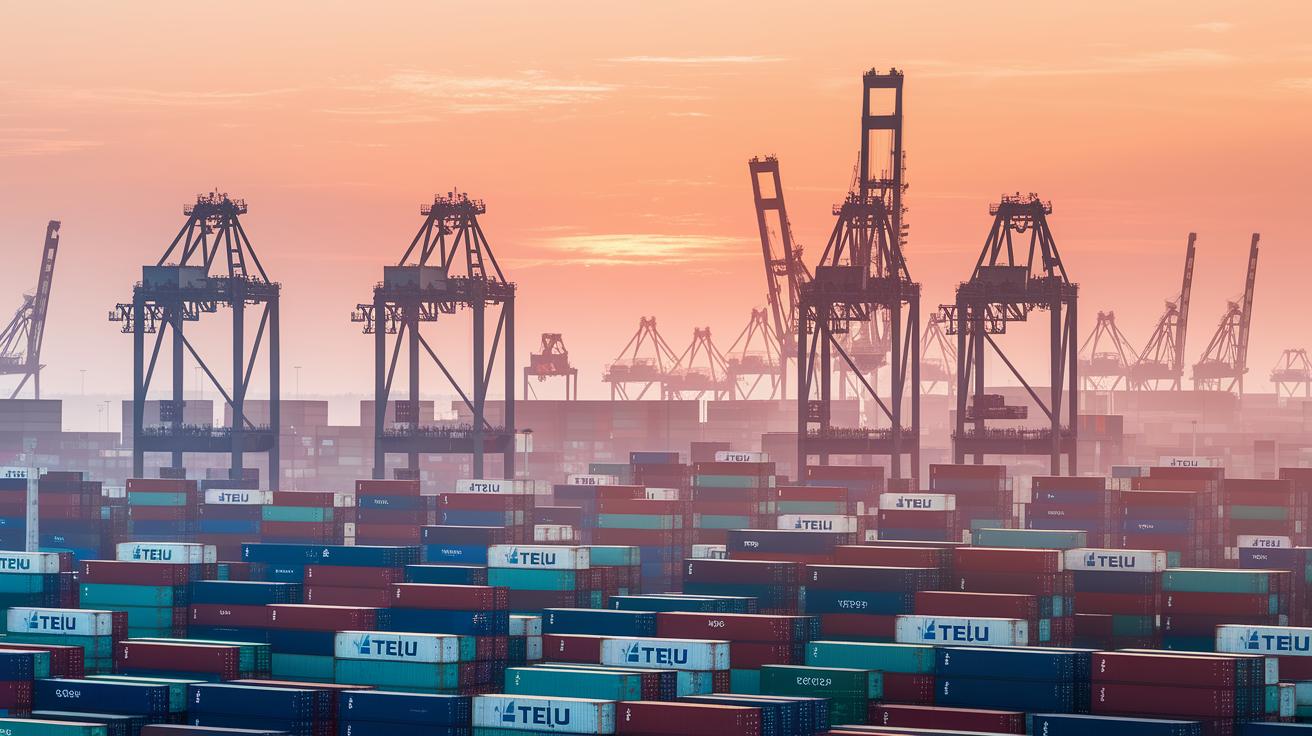
Since the early 2000s, shipping container traffic has shot up, reaching a whopping 840.6 million twenty-foot units by 2021. TEU, which stands for twenty-foot equivalent unit, is a simple way to show how much cargo a port handles. Think of it like how a busy café tells you it’s popular by the long lines out the door. Just as a bakery ramps up baking for a big festival, ports boost their operations to meet the rising demand.
Now, around 90% of goods worldwide travel in containers, revealing just how much our global trade depends on these handy units. This isn’t only about big numbers; it means ports have had to get creative, adding smart systems and automated cranes to keep things moving smoothly. Have you ever admired how effortlessly containers seem to glide from ship to dock? It’s a neat example of human innovation in action. As trade grows, containerization stays key to keeping the world’s industries connected.
Performance Spotlight: Best and Worst Performing Busiest Ports
Using the Container Port Performance Index 2022, experts checked out 348 ports to see how smoothly they handle cargo and meet growing demands. This snapshot gives us a clear picture of who’s thriving and who’s having a hard time keeping up.
Some ports really shined under the pressure. Take Tanger-Med in Morocco, for example, it leaped from 3.3 to 7.6 million TEUs between 2017 and 2022 and quickly became a real standout in the top 30. And then there’s Yangshan, holding down the number one spot, with Salalah close behind. Khalifa also impressed by coming in third. It just goes to show that smart moves and steady improvements can pay off big time.
| Top Performing Port |
|---|
| Yangshan |
| Salalah |
| Khalifa |
On the flip side, some ports are really feeling the heat. The Port of Savannah ended up at the bottom of the list at number 348, pointing to serious performance issues. Other major hubs like New York & New Jersey, Los Angeles, and Long Beach are also lagging behind, sitting at ranks 306, 336, and 346 respectively. These challenges highlight a big gap between the very best and the rest, calling for more efficient operations and fresh ideas.
| Worst Performing Port |
|---|
| Savannah |
| New York & New Jersey |
| Los Angeles |
| Long Beach |
Regional Dominance: Asia’s Stronghold in the World’s Busiest Ports

Asia has carved out its leadership on the global stage by using its natural geography and lively trade clusters to full advantage. Take Shanghai, for example. Nestled where the East China Sea meets three grand rivers, it feels like a magical crossroad of waterways. Imagine drifting along winding channels that usher in countless shipments, it's as if the city is cheerfully greeting the world every time it moves millions of twenty-foot containers.
Not far off, Shenzhen in the vibrant Pearl River Delta handles roughly 23 million TEUs every year. The city's rapid pace mirrors the region’s heartbeat, a blend of busy industry and smart logistics that makes everything seem effortlessly connected. Other ports like Ningbo-Zhoushan and Qingdao also stand out, moving 17.351 million and 15.520 million TEUs respectively. These ports serve as friendly neighborhood gateways, each one opening a door to global opportunities like hidden treasures waiting to be found.
Next, consider Guangzhou. With 15.309 million TEUs, it plays a key role in carrying raw goods like iron ore to where they're needed. Over in Tianjin, about 13.010 million TEUs are moved every year, linking inland regions with busy coastlines through reliable rail-sea connections. And then there's Singapore, a top transshipment hub that stands strong thanks to its perfect maritime location and dependable connectivity.
All these bustling ports create a ripple effect across the region. The strong local networks here boost growth far beyond any single hub. Asia’s maritime leadership not only drives its own economic momentum but also lights up every shipping lane around the world.
Infrastructure and Innovation: Modernizing the World’s Busiest Ports
Ports all around the world aren’t just giant shipping hubs; they’re also marvels of modern engineering and smart design. Many are putting big bucks into upgraded infrastructure to handle more and more container traffic. Take Tanger-Med, for instance. Their deep-water berth expansion led to a surprising 129% jump in container growth between 2017 and 2022. Imagine a lively market that suddenly doubles its space, Tanger-Med did just that by turning to deep-water solutions.
Shanghai’s Yangshan Phase IV expansion is another great story. By increasing capacity and cutting down on congestion, the port now welcomes mega-ships with ease. These days, you’ll find automated gantry cranes swiftly moving containers alongside digital terminal management systems that keep an eye on everything in real time. When Shanghai upgraded its terminal with smart automation, it was like watching a well-oiled machine speed up a busy morning routine.
New dredging techniques and smart terminal systems further improve cargo handling. These ports also mix in rail–sea connections to link ships with inland transport, making delays less of an issue. These smart investments in technology and infrastructure not only keep things running smoothly but also keep ports as the beating heart of global trade. It’s amazing to see how modern engineering and forward-thinking ideas can transform these hubs into centers of innovation that drive the world’s commerce.
Future Outlook: Growth Projections and Sustainability at the World’s Busiest Ports

Back in 2021, container traffic hit an impressive 840.6 million TEUs, setting the stage for a steady growth journey that’s truly exciting. Experts now expect these busy ports to grow by about 5-7% each year over the next decade. It’s clear they aren’t just coasting along; they’re getting ready to boost both capacity and efficiency.
Looking ahead, it’s not all about moving more containers. Ports are putting sustainability front and center. They’re embracing ideas like shore-power hookups to cut emissions, using low-emission cargo equipment, and trying out green dredging methods to protect our oceans. And, with digital tools like AI-powered scheduling and real-time tracking systems on board, every shipment gets a smoother, greener journey.
In truth, the future of these hubs is all about blending growth with care for our planet. With these forward-thinking changes, the world’s busiest ports are ready to lead a new era of efficient and sustainable global trade.
Final Words
In the action, we journeyed through global seaport rankings and container trends, highlighting key players and unprecedented growth. We explored how efficiency studies, regional clusters, and smart innovations shape today’s leading hubs. Asia’s maritime prowess shone brightly as we detailed the path from raw capacity to cutting-edge infrastructure. The discussion underscored that with focused modernization and eco-friendly practices, the world busiest ports are set for a promising future. The blend of performance data and future insights truly invites us to look ahead with excitement.
FAQ
What are the world’s busiest ports?
The world’s busiest ports are ranked by container throughput. For example, the Port of Shanghai tops the list with the highest TEU volume, followed by major hubs like Singapore, Shenzhen, Ningbo-Zhoushan, and Qingdao.
Which ports are considered the busiest in Europe?
The busiest ports in Europe include top names like the Port of Rotterdam, which is renowned for its high container handling volume and strategic location, making it a major gateway in European shipping.
What is the busiest port in the US?
The busiest port in the US by container volume is typically the Port of Los Angeles, known for its large throughput and role as a crucial link in global shipping networks.
Which port is the 2nd largest in the world and what is the most populous port?
The second largest port globally is often considered to be the Port of Singapore, while the Port of Shanghai holds the title for the most populous port in terms of container volume and global impact.
What are some of the top 10 or top 20 biggest ports in the world?
The top ports by container throughput include Shanghai, Singapore, Shenzhen, Ningbo-Zhoushan, and Qingdao among the top 10, with others rounding out the top 20 based on cargo volume and operational efficiency.
Which port is known as the largest by area?
When referring to area, the Port of Jebel Ali stands out as one of the largest due to its expansive facilities that support high volumes of cargo and container processing.
What are the projections for the world’s busiest port by 2025?
Forecasts suggest that the world’s busiest ports will continue to grow, with annual TEU increases and advancements in technology and infrastructure supporting the projected rise in container throughput by 2025.
Can you tell me about the Port of Shanghai?
The Port of Shanghai is recognized as the world’s busiest container port, handling an impressive TEU volume that has grown steadily, making it a cornerstone in global shipping and a vital economic hub.
What distinguishes the Port of Singapore?
The Port of Singapore is famous for its key role as a transshipment hub, with efficient operations and strategic maritime links that facilitate the quick transfer of containers across global shipping routes.
What are the special features of the Port of Ningbo-Zhoushan?
The Port of Ningbo-Zhoushan is notable for its high container throughput and logistical efficiency, serving as a critical gateway for trade in Asia and contributing significantly to regional cargo volumes.
How does the Port of Rotterdam contribute to global shipping?
The Port of Rotterdam plays a major role in global shipping by acting as Europe’s largest port, offering extensive infrastructure, deep-water access, and a strong connectivity that fuels international trade.
What makes the Port of Jebel Ali unique in the global maritime landscape?
The Port of Jebel Ali is unique due to its expansive area, modern facilities, and strategic location, which together support high cargo volumes and efficient logistics in the busy Middle East shipping network.