Reviews
How to Spot Fake Hotel Reviews Before You Book
Learn how to spot fake hotel reviews in 5 minutes. Check timing, language, and photos before you book your next stay. Don't get fooled.

Think five-star reviews mean a five-star stay? Think again.
Some hotels or marketers game the system, and those shiny scores can steer you to the wrong door.
This quick guide shows the fastest signs to spot fake hotel reviews before you book, like language quirks, timing spikes, reviewer history, missing verification, and phony photos.
Spot patterns, not single odd comments, and look for at least three flags before you panic.
Do this five-minute scan and save yourself a disappointing stay and wasted money.
The Fastest Signs a Hotel Review May Be Fake
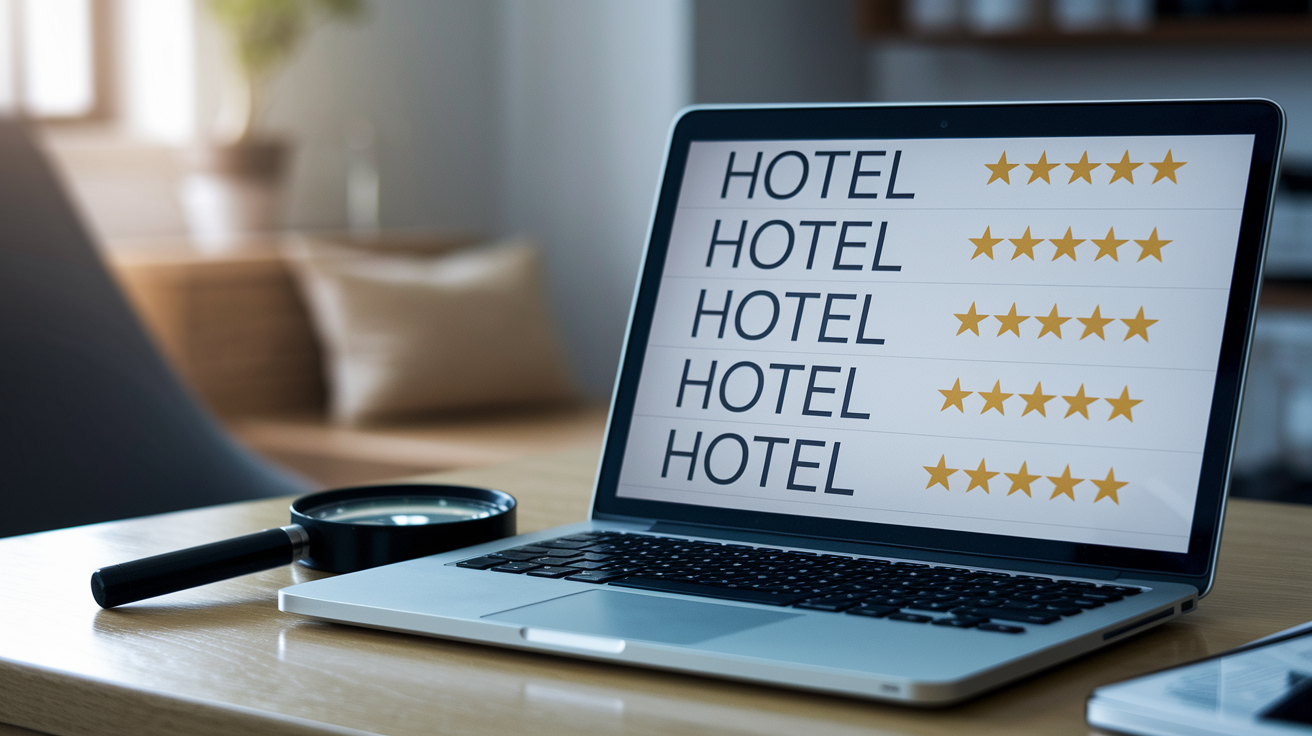
No single clue proves a review is fake. The safest bet is to look at language, reviewer history, timing, rating distribution, verification status, and photos together, not in isolation. One odd word choice doesn’t mean much on its own. A cluster of odd signals does.
Patterns across several reviews matter more than one unusual comment. A single short review might just be a guest in a hurry. But ten short, nearly identical reviews posted the same weekend? That’s worth a second look. Here’s the fast scan to run before you commit to a booking.
- Praise or criticism with no stay specific details, like “Amazing hotel! Clean rooms, perfect service. Best stay ever!” with no dates, room numbers, or names attached.
- Many perfect or one star ratings posted close together, especially if they appeared within the same day or two.
- Identical sentences or sentence structures repeating across different reviewer names.
- New or nearly empty reviewer profiles with little to no history beyond this one post.
- Missing verified stay labels on reviews that otherwise read like a sales pitch.
- Stock looking, stolen, or duplicated photos that feel more like a brochure than a guest’s phone camera.
- Claims that conflict with what you’re seeing on other platforms for the same property.
Here’s the editorial note worth saving: don’t write off a review set after spotting just one flag. Look for at least three corroborating red flags before deciding the reviews are probably manipulated. That threshold keeps you cautious without making you paranoid.
Why Hotels Attract Fake, Paid, and Misleading Reviews
(((alt-img2)))
A higher star rating isn’t just nice to look at, it directly affects bookings. Properties that climb from 3.8 to 4.3 stars often see more clicks, more reservations, and better placement in search results. That financial upside is exactly why some hotels, or marketing contractors working on their behalf, get tempted to buy glowing reviews instead of earning them the slow way.
This is where review farms and swapping networks come in. A review farm can pump out dozens of short, five star posts in a matter of days, often written by accounts with little else on their profile. Review swapping works a bit differently, where property owners or managers agree to post positive reviews for each other’s listings. Then there’s the quieter tactic: offering guests a discount, a free breakfast, or a room upgrade in exchange for a glowing post, without disclosing that the review was incentivized. Some properties also work to suppress or bury legitimate criticism, making the overall picture look rosier than it really is.
Not every fake review pushes ratings up, though. Competitor sabotage works in the opposite direction, flooding a property with coordinated one star attacks, often repeating the same minor complaint word for word. So when you’re scanning reviews, remember that manipulation can skew a rating too high or too low. An incentive alone doesn’t make an opinion false. But when a reward goes undisclosed, it can quietly shape both the wording and the star count in ways a reader can’t easily see.
Language Clues That Reveal Fraudulent Hotel Reviews
(((alt-img3)))
The words a reviewer picks often say more than the star rating does. Short, vague, or extreme language is one of the clearest tells that something isn’t quite right, while specific, balanced details tend to build real credibility.
Overly Generic and Exaggerated Language
A review like “Best hotel ever. Clean, great staff. 10/10” sounds positive, but it tells you almost nothing. There’s no room number, no mention of a specific staff interaction, no sense of what actually happened during the stay. Watch for flawless praise with zero nuance, vague hostility with no real incident described, excessive punctuation or emoji, and dramatic stories that never name a room, a service, or a specific moment. Bot generated or templated text often repeats phrasing unnaturally and sometimes even mismatches the sentiment with the star rating given.
Specific, Balanced Language
A review becomes far more believable when the details form a coherent timeline, dates, trip length, room number, price, a staff name, maybe a small complaint tucked in alongside the praise. That mix of good and slightly less good is what real stays usually produce. Worth noting though, details alone aren’t a guarantee of authenticity. A fabricated review can invent specifics too. Treat detail as a strong signal, not an automatic stamp of approval.
| Review Sample | Signals to Notice | Likely Confidence Level |
|---|---|---|
| “Amazing hotel! Clean rooms, perfect service. Best stay ever!” | No dates, no room details, no staff names, under 20 words | Low |
| “Great place, loved it, would recommend to anyone!!!” | Generic adjectives, excessive punctuation, no specifics | Low |
| “Stayed 3 nights in room 512. AC was noisy the first night, but Maria at the front desk replaced the unit same day. Paid $18 for the hot breakfast option. Seven minute walk to the train station.” | Dates, room number, staff name, price, minor complaint, location detail | High |
| “Visited July 11 to 15. Pros: rooftop pool, quiet street. Cons: limited vegan breakfast options. Photos attached of the room layout and bathroom tiles.” | Dated stay, balanced pros and cons, supporting guest photos | High |
Reviewer Profiles and Verified Stay Signals to Check
(((alt-img4)))
Judging the text alone only gets you halfway there. The next step is opening the reviewer’s public profile and seeing who’s actually behind the words. Most platforms let you click a reviewer’s name to see their review count, join date, and sometimes a rough location history.
Final Words
Scan language, reviewer history, timing, rating mix, verified-stay badges, and photos together. No single clue proves fraud.
Patterns across several reviews matter more than one odd comment. Use the quick-scan red flags and the pre-booking checklist: read 8–12 recent reviews, check reviewer profiles, reverse-image-search photos, and watch for timing bursts.
This method shows how to spot fake hotel reviews and helps you pick a hotel you can trust. When in doubt, choose refundable rates, and you’re more likely to enjoy a smoother trip.
FAQ
Q: How to tell if a hotel is good or bad?
A: To tell if a hotel is good or bad, check recent verified reviews, star distribution, guest photos, management replies, location, cleanliness notes, and price-value—use at least three independent signals before deciding.
Q: What is review bombing?
A: Review bombing is a coordinated surge of negative or positive reviews meant to alter a property’s score, often driven by disputes, politics, or competitors; signs include identical complaints and sudden timing bursts.
Q: What’s the worst hotel chain?
A: The worst hotel chain is subjective; instead judge chains by recurring problems across platforms—cleanliness, safety, hidden fees, unresolved complaints, and poor management replies—and avoid brands with consistent red flags.
Q: Is it illegal to show fake reviews?
A: Showing fake reviews can be illegal in many places because it’s deceptive advertising; platforms may remove content and regulators can fine businesses, though enforcement and penalties vary by jurisdiction.
More from Politics
 Destinations
Destination Events: Unforgettable Gatherings Await Every Planner
 Destinations
Budget Honeymoon Destinations: Romantic Escapes Without Overspending
 Destinations
Family Friendly Vacation Destination: Joyful Memories Await Everyone
 Destinations