
Ever wonder what lies exactly on the other side of our world? Imagine flipping your coordinates like a fun puzzle to find your mirror image on the globe. Sure, it might sound a little wild, but every decimal makes a difference when you switch your latitude and tweak your longitude.
This guide is like a friendly chat over coffee, it walks you through each clear, step-by-step move to help you find that opposite spot. Discover the little thrill of pinpointing your antipodal point and see how a few simple flips can give you a whole new view of our amazing planet.
How to Calculate the Opposite Side of the World from Me with Exact Coordinates

An antipodal point is simply the spot exactly on the other side of the Earth from you. It sounds a bit wild, but using decimal degrees for latitude and longitude makes it super precise, every digit really matters. Imagine finding your own mirror image on the globe; it’s a fun way to explore world geography in a new light.
Step one, fire up Google Earth on your PC, zoom in on your current location, and jot down your coordinates using clear decimal numbers. Next, if you’re on your smartphone, apps like Map Coordinates for Android or Google Earth for iOS give you quick access to your exact location details. Then, carefully copy your coordinates, making sure every digit is right with no extra spaces or mistakes.
Accuracy really is key here. It’s easy to mix up positive and negative signs, just remember to flip the sign for latitude. For longitude, you’ll add or subtract 180 to get the exact opposite on our 360-degree globe. Keep an eye on those decimal points so you don’t accidentally change a digit. Taking these extra moments ensures you pinpoint the exact mirror image of your location and opens up a truly fascinating travel adventure.
Understanding Antipodal and Geographic Inversion Positions on the Opposite Side of the World from Me
Finding your spot on the opposite side of the planet is easier than you might think. To flip your latitude, simply change its sign. For example, if you’re at 44.755275° North, switch it to 44.755275° South to show how far you are from the equator.
For the longitude, the trick is to add or subtract 180°. If you’re in the eastern hemisphere, subtract 180°. If you’re in the western, add 180°. It’s like turning the globe halfway around. So, 75° East becomes 105° West.
Take your time and double-check each step. Make sure you get the decimals and the signs right so that your opposite world position is accurate.
Visualizing the Opposite Side of the World from Me with Interactive Mapping Tools
Google Earth helps you explore the other side of the world with just a simple search. Just type in your flipped latitude and longitude, and the map whisks you off to a completely different corner of our planet. Tools like Antipodes Map and Geomidpoint make it easy to check exactly where your mirror image lands. Fun fact: about 70% of these opposite points end up in the ocean. Imagine watching Google Earth glide over deep blue waters to show you a watery twin of your location.
Both Google Earth and online calculators have their perks and limits. Google Earth offers clear, detailed imagery and is great for those who love to wander virtually, though it might not work as well on your phone sometimes. Meanwhile, antipode calculators give you fast and straightforward answers, even if they don't show you as much detail. Ever feel that little thrill when a tool instantly reveals a hidden coastal view? Each option brings its own charm to the adventure of discovering your world’s mirror image.
Exploring Land vs. Ocean on the Opposite Side of the World from Me
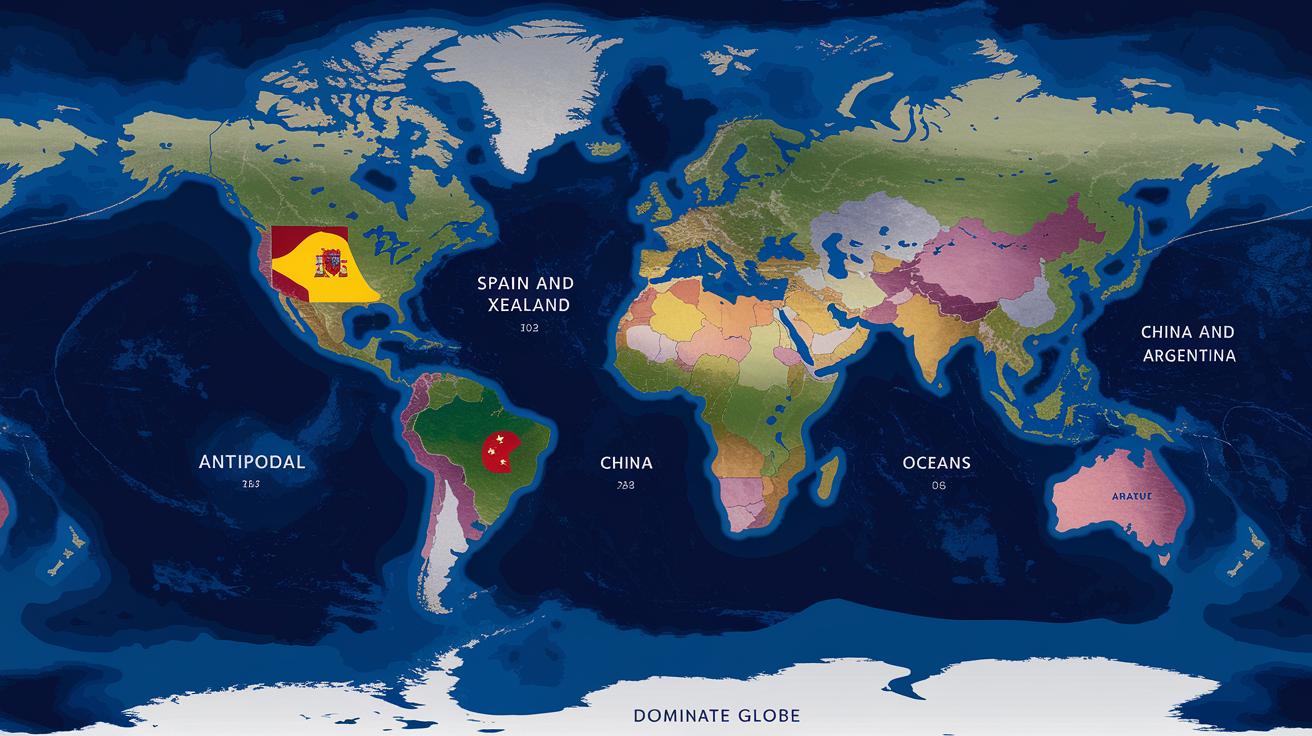
Did you know that about 70% of our planet is covered by water? That means when you check your exact opposite point on Earth, or your “mirror image,” there's a good chance it lands in the ocean, even if you're standing on solid ground. Only around 30% of the Earth is made up of land, which makes finding a spot that faces another spot on land a really rare and thrilling adventure.
Think about cool examples like Spain and New Zealand. It's not every day you come across two land spots that are direct opposites, and it can feel like you’ve uncovered a secret travel link. The same goes for China and Argentina. Imagine bustling cities and peaceful countryside being mirror images of each other! It’s like writing a diary entry that says, “I found a twin city in China and Argentina, and it felt like I discovered a hidden secret on Earth.” This kind of travel twist sparks curiosity and invites us to explore even more.
And if you find out that your exact opposite falls in a sparkling ocean instead of on land, don’t be disappointed. Let it fire up your imagination for your next journey. Every little detail reminds us how diverse our planet is, from lively seaside towns to quiet, far-off places. Have you ever thought about how flipping the globe might lead you to an unforgettable travel surprise?
Practical Applications of the Opposite Side of the World from Me in Travel and Education

Imagine switching up your travel plans by including a stop at the exact opposite point of the Earth. Picture leaving a bustling city and landing in a quiet, mirrored spot on the globe. This twist in your itinerary brings new adventure and fresh inspiration, turning a regular trip into a global journey.
Scientists find these mirror locations fascinating too. They use them to map how earthquake waves move and to explore the Earth’s hidden layers. This straightforward method helps build a solid framework for studying how energy travels through our planet and even forecasts future events.
In classrooms, teachers spark curiosity by having students calculate their exact opposite on Earth. This hands-on exercise makes geography exciting and relevant to everyday life. It’s a fun way to tie what they learn in school to real-world journeys and discoveries.
Top Tools & Apps to Find the Opposite Side of the World from Me

Finding the point exactly opposite you on the globe can be a fun little adventure. A great app will be super accurate, clear to use, and friendly on your mobile device. Look for ones that offer high-resolution maps, let you work without an internet connection, and let you easily share or save coordinates. It’s like carrying a secret map in your pocket!
Here’s a quick look at some popular choices:
| Tool/App | Platform | Key Features |
|---|---|---|
| Antipodes Map | Web | Offline mode, satellite overlays |
| Geomidpoint | Web & Mobile | Simple UI, coordinate export |
| Antipodal World | Mobile | Detailed maps, offline access |
| MapRef | Android/iOS | Intuitive design, coordinate export |
Before you settle on one, think about what fits your travel style and your device. Give it a try, read reviews, and see if the interface feels natural when you use it. Whether you need offline maps for a remote adventure or exact coordinates for planning your trip, pick the tool that makes finding your mirror self as fun as discovering a hidden gem.
Final Words
In the action, we explored how to pinpoint your exact antipodal point by calculating coordinates using simple tools and apps. The article walked through transforming your latitude and longitude into their mirror image, compared interactive mapping platforms, and uncovered the rarity of land versus ocean opposites. We also looked at practical travel tips and educational uses that make the process both fun and useful. Remember, finding the opposite side of the world from me can spark a spirit of adventure and endless curiosity. Happy travels!
FAQ
What is the opposite side of the world from me on Google Maps?
The opposite side of the world from you on Google Maps is your antipodal point. It’s found by taking your exact latitude and longitude and flipping them, showing you the direct mirror image across the globe.
What is an antipodes map and how does it work?
An antipodes map displays the exact opposite location on Earth relative to any point. It’s a handy travel tool that lets you see which part of the world lies directly across from your current spot.
How do you calculate an antipodal point for a location like North Carolina or Minnesota?
Calculating an antipodal point involves reversing the latitude’s hemisphere and subtracting or adding 180° to the longitude. This process reveals the exact mirror image location for places like North Carolina or Minnesota.
What is the term for the opposite side of the world and how is it pronounced?
The term for the opposite side of the world is “antipodal point,” pronounced an-ti-pohd. It refers to the geographic mirror of your current location on the Earth.
What are some examples of famous antipodes, like the antipode of Anchorage, Alaska or New York?
Famous antipodes often include land-to-land pairs. For example, some calculated mirror points for cities like Anchorage, Alaska or New York may fall in remote or oceanic regions, highlighting the fascinating diversity of Earth’s geography.